Nigeria Digitizes Academic Credential Authentication: A New Era for Efficiency and Transparency
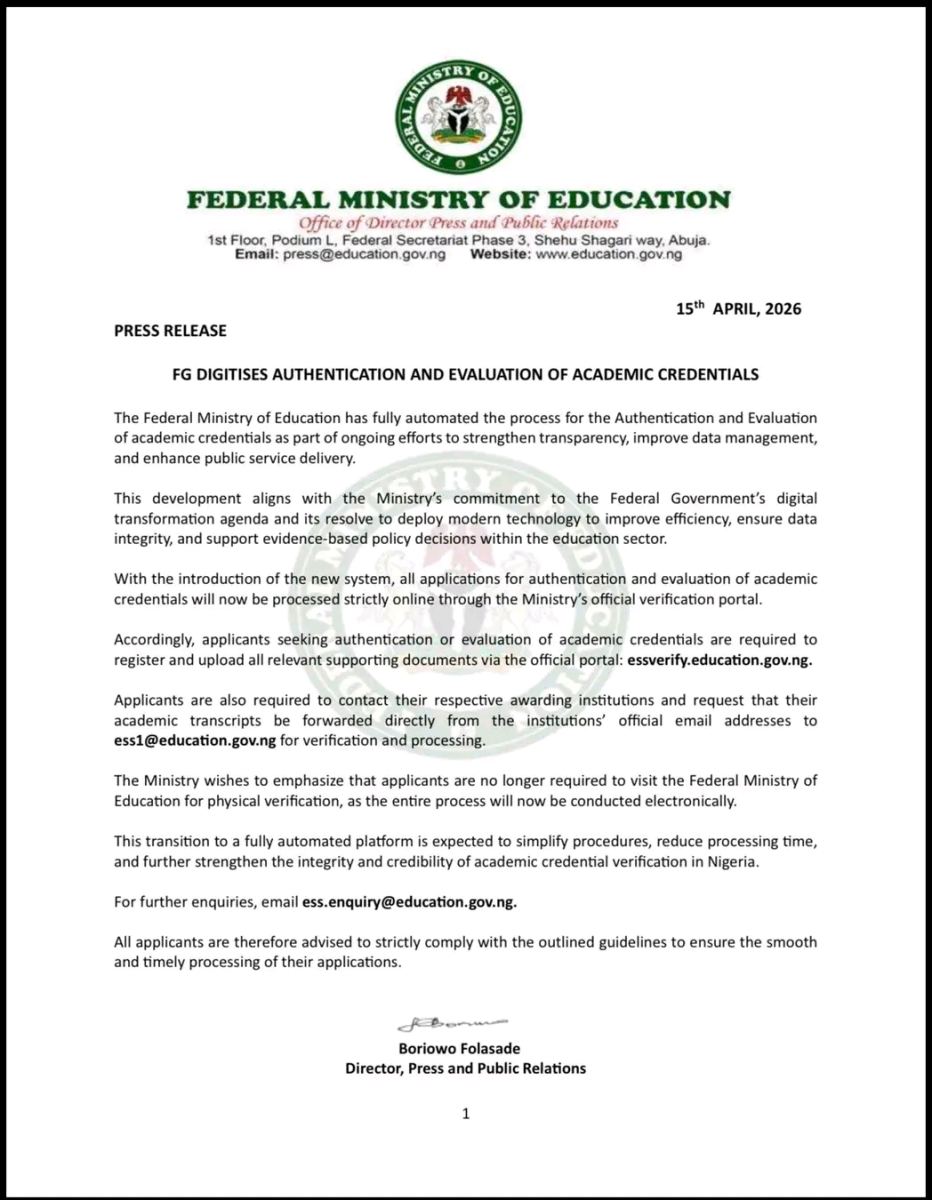
This transformative policy shift, announced on April 15, 2026, marks the end of an era defined by long queues, manual processing, and the arduous task of physical visits to government offices. By leveraging modern technology, the Nigerian government is not only streamlining its internal operations but also providing a faster, more secure, and reliable service to thousands of Nigerians—at home and in the diaspora—who require their qualifications to be verified for employment, further studies, or immigration purposes.
Why This Shift Matters
For years, the process of verifying academic credentials in Nigeria was often cited as a significant hurdle. Whether it was a fresh graduate seeking to enter the job market or a seasoned professional looking to further their career abroad, the requirement for manual authentication was frequently marred by delays, logistical challenges, and, occasionally, concerns regarding data integrity.
The Federal Ministry of Education’s decision to digitize this process addresses several critical pain points:
Elimination of Physical Bottlenecks: By moving the entire application process online, the Ministry has effectively removed the need for applicants to travel to Abuja, stand in long queues, or deal with intermediary agents. This democratizes access to service, ensuring that a Nigerian in Lagos, Kano, or London has the same seamless experience.
Enhanced Data Integrity: Digital systems inherently offer better security and audit trails than paper-based files. The new portal ensures that every document is logged, tracked, and verified through a secure, standardized channel, significantly reducing the risk of fraud and credential manipulation.
Improved Efficiency and Speed: Automation allows for faster processing times. By shifting the administrative load to a digital portal, the Ministry can move through applications with greater agility, reducing the waiting period for applicants who are often under pressure to meet strict academic or professional deadlines.
Strengthening Global Credibility: As Nigeria continues to push for its citizens to be globally competitive, the ability to verify qualifications quickly and reliably is essential. A robust, digital verification system enhances the credibility of Nigerian academic certificates on the international stage.
How to Navigate the New Digital Portal
The transition to this new system is absolute. The Ministry has made it clear that physical visits for the purpose of credential verification will no longer be entertained. To ensure your application is processed without delays, it is vital to follow the new protocols precisely.
Step 1: Visit the Official Portal
All applications for authentication and evaluation of credentials must now be initiated through the Ministry’s official verification portal at:
Ensure that you are using this exact URL to avoid potential phishing sites. Bookmark the page, as this will be your primary hub for all interactions regarding your credentials.
Step 2: Register and Upload
Upon reaching the portal, follow the prompts to register your account. You will need to provide accurate personal information and upload all required supporting documents. It is advisable to have high-quality digital copies (scans) of your degree certificates, diplomas, and any other relevant identification documents ready before you begin the process.
Step 3: Coordinate with Your Institution
A crucial component of this new system is the requirement for direct institutional involvement. You must contact your awarding institution immediately. Request that they forward your academic transcripts directly from their official, authorized email addresses to the Ministry’s designated email address:
The Ministry will use these official transmissions for verification and processing. Failure to coordinate with your school to have your transcripts sent to this specific address will stall your application.
Understanding the Importance of Direct Verification
The requirement for transcripts to be sent directly from the institution is a standard global practice to ensure the authenticity of academic records. By bypassing the applicant and having the data come straight from the source (the university or polytechnic), the Ministry ensures that the documents are verified against the institution’s internal records, effectively neutralizing the possibility of altered or forged documents entering the system.
Troubleshooting and Further Enquiries
Transitioning to a new digital system can sometimes come with questions, particularly during the initial rollout phase. The Ministry of Education has established a dedicated channel for support to assist applicants as they navigate the portal.
If you encounter technical issues, have questions regarding specific document requirements, or need clarification on the status of your application, you are advised to email:
💬 Discussion
Only registered members can comment.
Click here to Login